Biography: Johanna McAllister
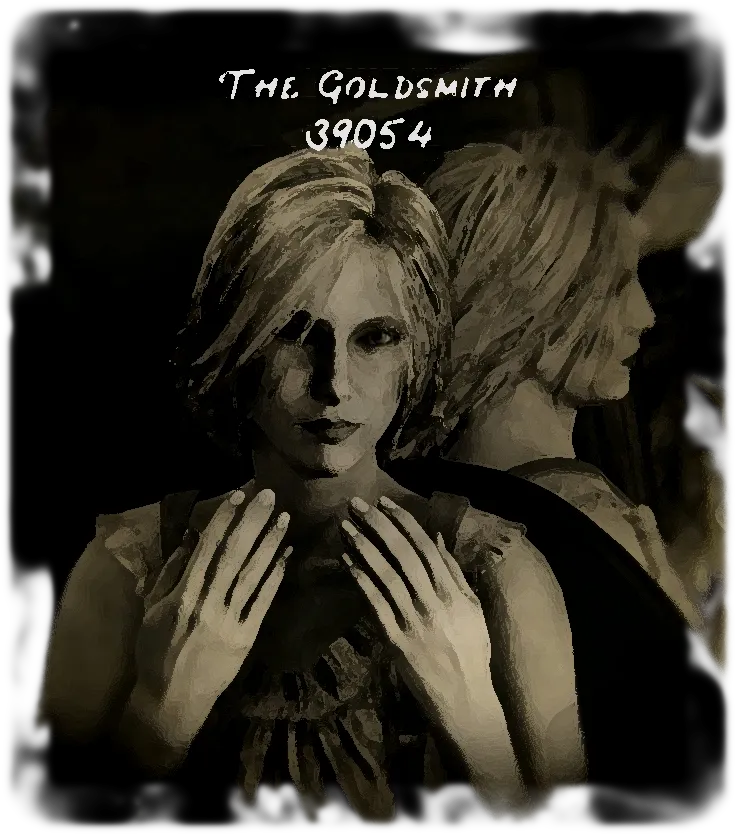
Nicknames: Jo, «Goldsmith»
Birth Date: 17th August 1864
Birth Place: Glasgow, Scotland
Place of Residence:
- Glasgow, Scotland (1864-1871)
- Arapaho Flats[1], U.S. (1871-1881)
- Verendrye[2], U.S. (1882-1890)
- Transitory (1890-1900)
- Arapaho Flats[1], U.S. (since 1900)
Occupation:
- Vagabond, unemployed (1881-1882)
- Stagecoach Rider, Wells Fargo & Company (1882-1886)
- Shotgun Messenger, Wells Fargo & Company (1886-1890)
- Vagrancy (1881)
- Petty Theft (1881)
- Soliciting (1882)
Biography
Johanna Leah McAllister was born to William and Rosalind McAllister on 17th August 1864 in Glasgow, Scotland. Her parents, also born in Scotland, were wealthy investors in gold mining operations during the American gold rush. With the Union Pacific Railroad expanding their rail network, in 1871, at age 7, the McAllister family relocated to the capitol of Arapaho Flats[1] in the United States - Five Points[4]. Building their own mansion and mining company headquarters, they set out to oversee the operation of their silver and gold mines in Fryer Gulch a few hours outside of town.
As an only child, Johanna was carefully educated to take over operations of the «McAllister Mining Co.» gold mining business once of age. Enjoying homeschooling by dedicated teachers and her mother, she lived a protected life in the large property of the family. Despite her excelling in her studies of business and arts (primarily calligraphy and singing), her father grew critical of his daughter, wishing he had a son who would lead the company with the iron hand it needed. He saw Johanna as incapable in this regard due to her gender and tried to correct it by treating her as a son, teaching her how to fight and shoot, much to her mother's disdain. William’s disdain of his daughter was only exacerbated by his wife's inability to have more children after contracting malaria.
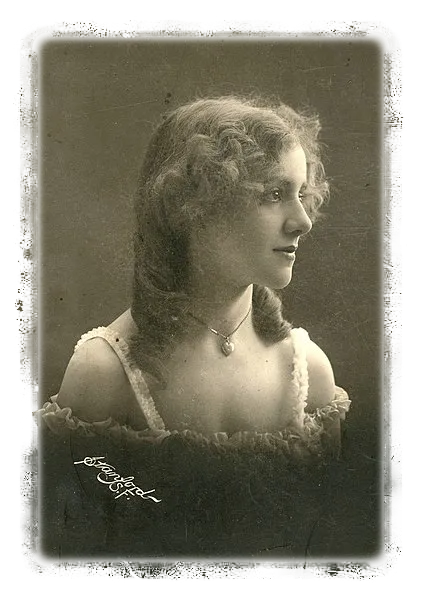 Johanna McAllister
at age 13 (1877)
In 1881, at age 17, William caught Johanna lying with another woman - Annabelle Clayton, a maid at the McAllister manor. Enraged by the prospect of his daughter being a lesbian, he beat and expelled her from the manor the same night. Disinherited and without support, Johanna scraped by as a vagabond and petty thief in the frontiers of Verendrye, making use of her education in business to scam people and defend herself if needed with her gun training.
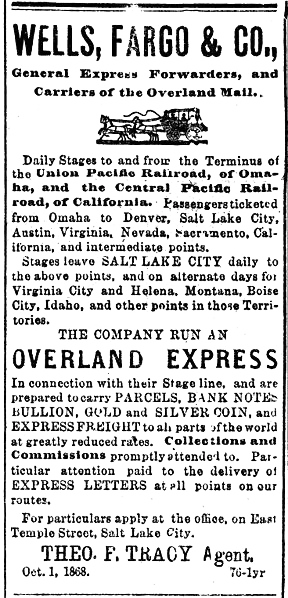
In 1883, as the Mail Express and Banking company «Wells Fargo & Company» expanded its operations in Verendrye - a
frontier territory in the north of the United States - and began hiring more mail riders and stagecoach drivers,
representatives of Wells Fargo & Co. became aware of Johanna in the city of Larimore, Arapaho Flats. Impressed by
her skill on a horse and her knowledge about the banking business, they hired her as a stagecoach rider at age 20.
Reinvigorated by a new purpose, Johanna flourished in the occupation of a mail rider, even if it was a physically
taxing and often dangerous job. Nevertheless, she enjoyed the travelling and independence that came with the
responsibility of being a mail rider, taking on more and more dangerous routes.
In 1886, four years after being hired by Wells Fargo & Co. as a stagecoach rider, Johanna accepted a position as a
shotgun messenger in the deeper frontiers of the free territories of the United States. In her new role for
the company, she transported valuables and important shareholders between train stations, secure offices and
banks, sometimes acting as the stagecoach driver and sometimes as a guard accompanying an armored coach.
Despite taking great risks and getting wounded on numerous occasions during attempted robberies, Wells Fargo &
Co. was not kind to her, paying her and the other female shotgun messenger decreasingly small wages, to the point where
Johanna considered giving up her job for another one. Instead, she remembered her time as a thief and scam artist
and decided to take advantage of her position as a guard for stagecoaches with valuable cargo, stealing enough to
keep herself in a comfortable position but without raising suspicion. She used her knowledge of bookkeeping and
calligraphy to forge cargo manifests, routes and schedules.
Regardless of her successful defrauding of her employer and the now good wage she “earned”, she stopped holding
any love for the company, its investors or the fights with other banking companies by undercutting the competition.
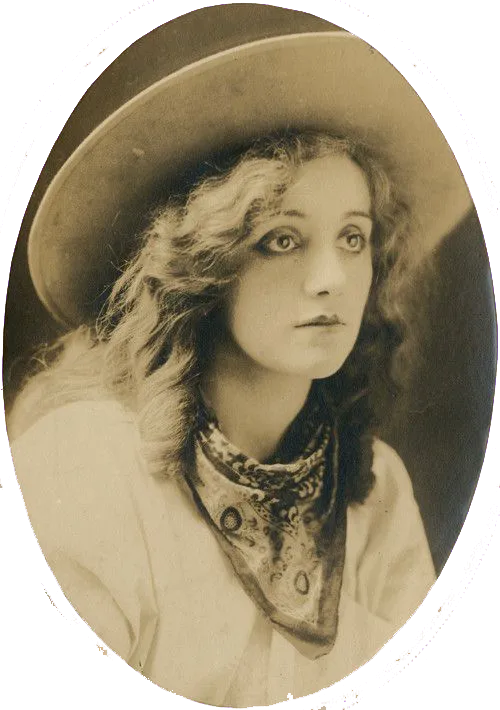 Johanna McAllister
at age 25 (1889)
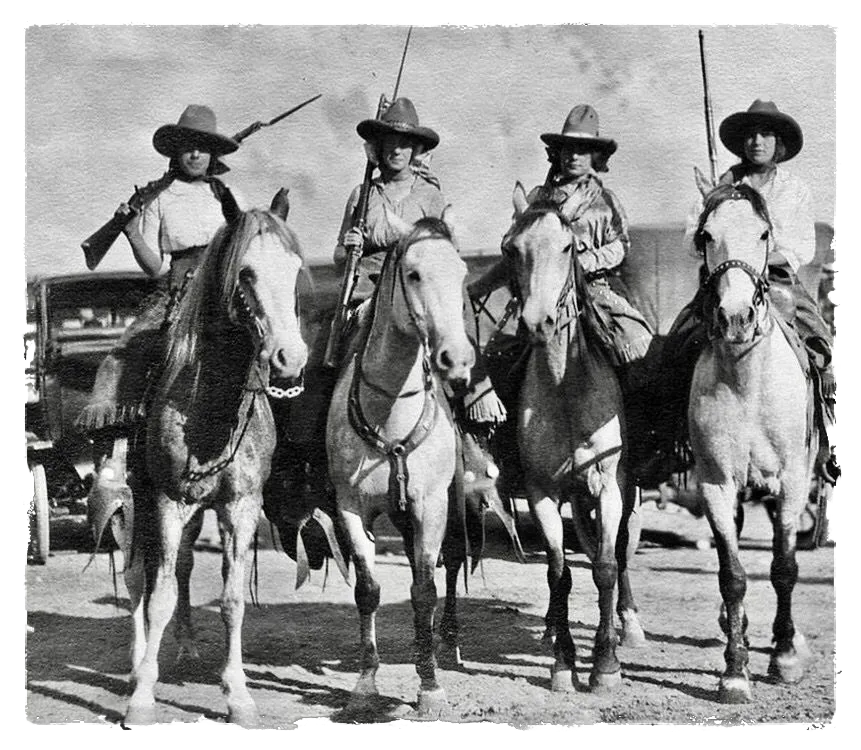 Johanna (2nd from the left) in the Wells Fargo & Co.’s Female Coach Guards Division (1889)
 Almost having settled into a still dangerous day-to-day life but now surrounded by companions she trusted unconditionally, her life took another unwanted turn in 1890. During one of Johanna’s routine stagecoach schedule forgeries, she would be alone with plenty of opportunity to lighten the load of a stagecoach carrying money to a bank in rural Verendrye. Knowing the particular route well and deeming it safe, she did however not expect Hosea Matthews of the Van der Linde Outlaw Gang[3] to have been following her paper trail and that particular route. Hosea Matthews, Arthur Morgan and John Marston ambushed the coach far from any help in the Verendrye forests. Bargaining for her life, Johanna explained her fraud of Wells Fargo & Co. and offered more opportunities for the men if they let her live. Hosea Matthews, who had just recently lost his wife Bessie, took pity on the woman and agreed to leave the woman alive in return for six months of her services as a fraudster for the Van der Linde Gang. During these months, Johanna funnelled all money she could from the stage coaches to the gang in the hopes of gaining favor with them and not be gotten rid of eventually. When her employer started an official investigation into the high rates of robberies, she knew that she would be discovered. With no other way out and having gained the trust of the lead enforcer Arthur Morgan – who she did most dealings with – they feigned her tragic death in a supposed set up and robbery, fleeing the state afterwards.
Now officially a member of the Van der Linde gang, throughout the 1890s, Johanna rode with the gang as their first and only gunwoman (and a gay one at that) which made it hard for her to fit in. She was often disregarded in robberies and instead brought leads, guarded the camp or was tasked with riding coaches, while the women in the camp had a lingering distrust in her romantic and sexual motives. Despite her protests, between Hosea and Arthur’s desire to protect her and the other gun men's disdain for a gay woman with a rifle, she came to see the gang as her family. Being taught all her life that showing emotion, especially as a woman, would put her in a position where others took advantage of her, she only dropped her guard around a few people. Thanks to this, she hid her feelings behind a mask of indifference rarely broken by anger or sadness. While not devoid of joy, she showed most of it through a cynical sense of sarcasm and misandry. One of those she broke her stone facade around was Hosea, who she quickly grew attached to, forming somewhat of a father-daughter relationship she never had in her childhood, as well as Arthur, and later on, Charles Smith.
With the funding of a fully fledged outlaw gang, Johanna was able to acquire tools like signets, wax seals, typewriters, printing keys and more to forge and falsify records in order to run scams and commit fraud on banks, mail companies, oil companies and more. At the same time, she was able to make use of her calligraphy skills to imitate and falsify signatures and commit check fraud. Her ability to seemingly print money out of nothing gained her the nickname «Goldsmith» among outlaws and detectives. Despite never using any identifying information and hiding her tracks even better than at Wells Fargo & Co., law enforcement caught her in the act of trying to defraud a bank in Pine City, West Elizabeth, U.S. with a fake check in 1897. She was arrested and spent one night in the Pine City jail, ready to be transferred to a penitentiary. However, with the help of her companions in the Van der Linde gang, she was able to break out and destroy almost all records of her with the law enforcement in West Elizabeth, among them her mugshot and the false check that caused her to get caught.
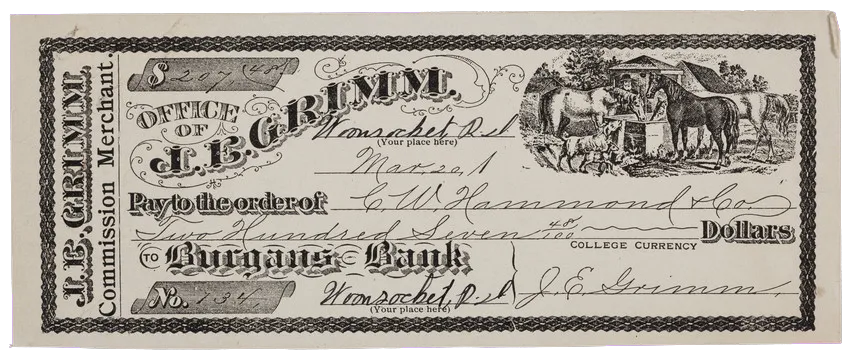 A check forged by Johanna McAllister over $207.48 for a made up persona «G.W. Hammond» (1897)
 Faced with the emotional fury and recklessness of a widowed Sadie Adler in 1899, combined with the steady decomposition of the gang she considered family, Johanna and Sadie helped each other to work through their emotions. For Johanna, that meant learning her self worth in a world that treated her as something to be exploited. Growing close through their shared pain of loss and anger at life, first as friends and later as unspoken lovers, they left behind the outlaw life under cover of their relative anonymity after the Pinkerton Detective Agency dispersed the remaining living members of the Van der Linde Gang.
Plagued by the lack of direction after losing the outlaw gang she had been apart of for so long as well as the ghosts of her past in Colorado, Johanna and Sadie ended up going separate paths with a promise to find one another again. Johanna, heading for Colorado to face her family and find closure, all while dodging the law, realized that she was just beginning to uncover another new facet of her life...
Gallery

as an Express Mail rider for Wells Fargo & Company (1884)
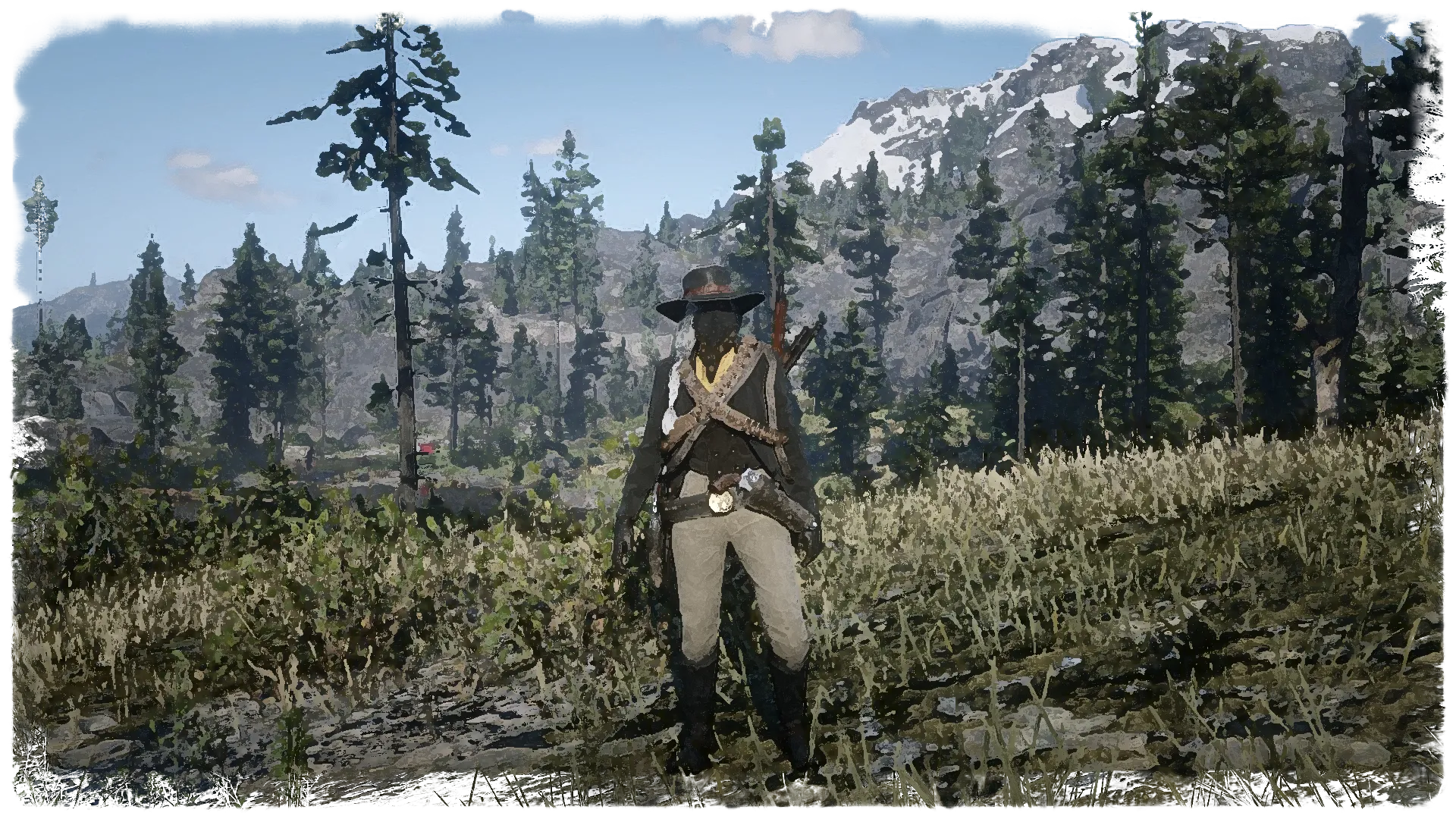 as a Gunwoman and Gunslinger in the Van der Linde Outlaw gang (early 1895)
 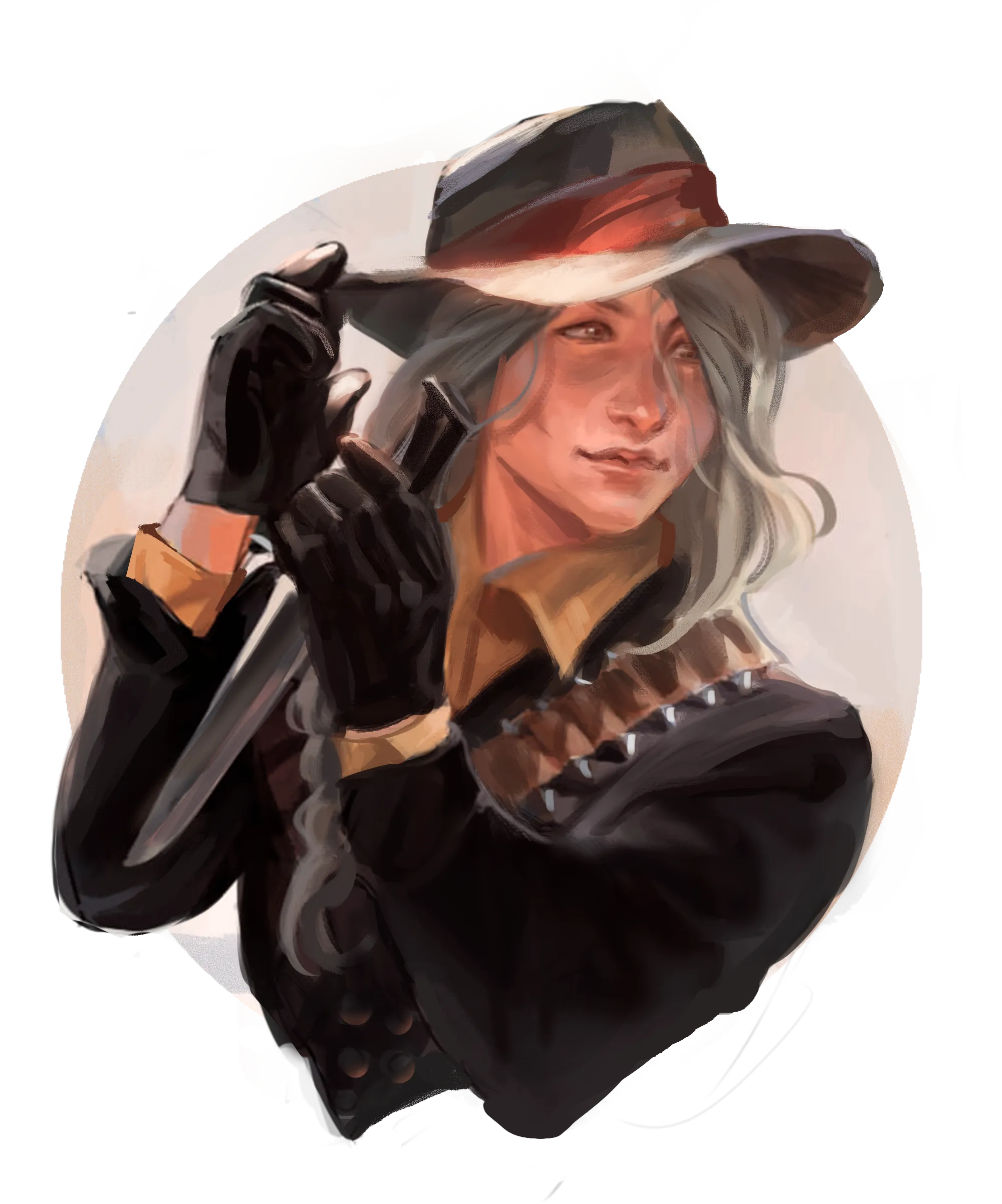 Portrait (1894)
 [1] Arapaho Flats is a mountainous state in central U.S. that began rapidly expanding during the American Gold Rush thanks to its natural ground ores.
[2] Verendrye is a free territory in the Northern U.S. most notable for its prominence of Indian Reservations. It lies north of Arapaho Flats and is notably less developed, although connected to the North Pacific Railway.
[3] The Van Der Linde Gang was one of the most notorious outlaw gangs operating all throughout the U.S. throughout the mid to late 19th century. Lead by the enigmatic personality «Dutch Van Der Linde», they staged robberies, defrauded banks and businesses, as well as extorted people with predatory loans. The gang disbanded after a fatal showdown with the Pinkerton Detective Agency killed some of its members and scattered the rest in 1899.
[4] Five Points is the capitol and most populous city of Arapho Flats thanks to its proximity to the ore-rich Rocky mountains. Settled in the backdrop of the mountains, it benefits from its early railway connection and fertile soil of the Great Plains.